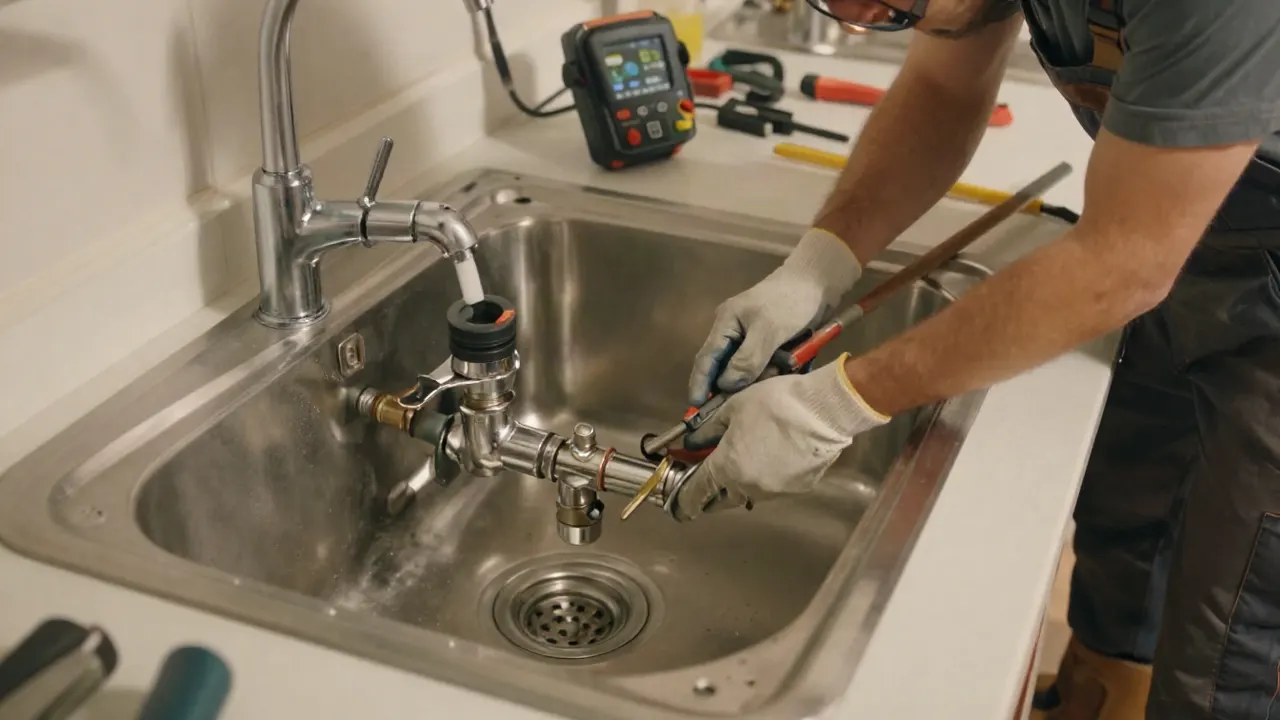
How to maintain your water heater for Longview hard water
Longview's water runs hard, and that mineral load settles in your tank. Here's how often to flush, what descaling costs in 2026, and the signs it's already too late.
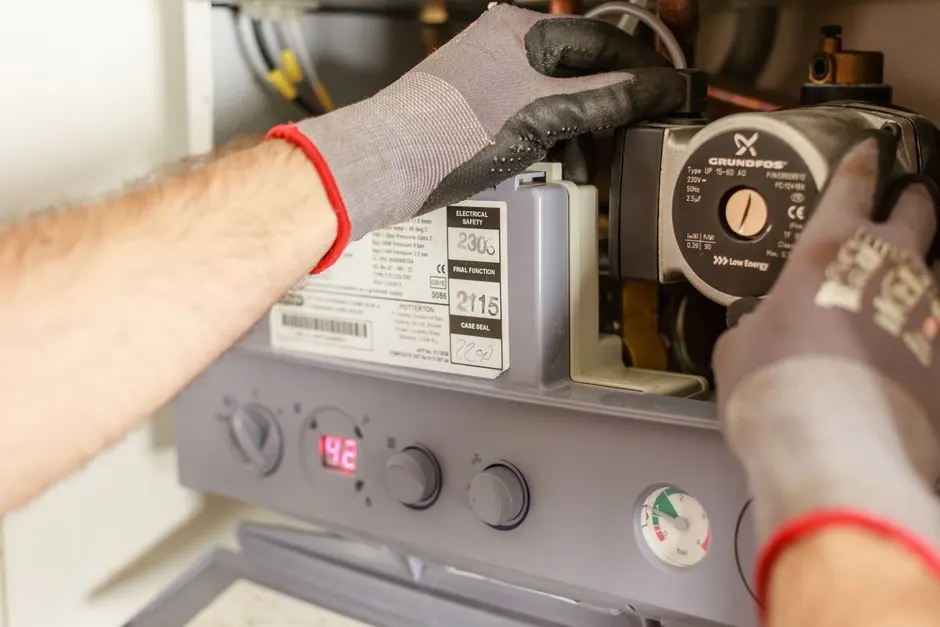
Hard water in Longview leaves calcium and magnesium behind every time your water heater heats a tank, and that scale settles on the bottom as a crusty layer that forces the burner to work harder and shortens the tank's life. The fix is a full flush every 12 months, a vinegar or citric-acid descale every 2 to 3 years, and a new anode rod every 3 to 5 years. Water heater maintenance for hard water in Longview WA is not optional upkeep - it is the difference between a tank that lasts 6 years and one that lasts 12.
We see the results of skipped maintenance every week in Longview, from the Highlands to Columbia Valley. This guide walks through what scale actually does inside your tank, how often to flush, what 2026 pricing looks like, and the warning signs that mean you have waited too long.
How does hard water affect my water heater in Longview?
Longview's municipal water runs hard - the Cowlitz River and local well sources both carry dissolved calcium and magnesium that measure in the 7 to 10 grains-per-gallon range, which is squarely in the "hard" to "very hard" band. Every time cold water enters the tank and gets heated to 120-140°F, those minerals precipitate out and stick to the steel.
Three things happen as the scale layer thickens:
- Heating efficiency drops. A 1/16-inch scale layer forces the burner or element to run longer to reach the same temperature. At 1/4 inch, you are burning roughly 20-25% more gas or electricity for the same hot shower.
- The tank corrodes faster. Scale traps sediment against the steel liner and creates hot spots. The anode rod - the sacrificial magnesium or aluminum rod that is supposed to corrode so your tank does not - gets consumed faster in hard water, sometimes in 2 years instead of 5.
- You hear it before you see it. That popping, rumbling, or crackling sound from the tank is steam trapped under the sediment layer. It is the single most reliable early warning sign of hard water damage to a water heater in Longview WA.
If your tank is already popping and you are seeing rusty water at the hot tap, the damage is well underway. Our team handles water heater repair longview WA calls every week where the only question left is whether the tank can be saved or needs replacing.
How often should I flush my water heater in Longview WA?
Flush your water heater once every 12 months in Longview - not the 2 to 3 years that generic national advice suggests. Our water is hard enough that annual flushing is the baseline, and if you have a large family or a 50-gallon tank that runs constantly, every 9 to 10 months is safer.
Here is the schedule we recommend for Longview homes:
- Every 12 months: Full tank flush to drain sediment.
- Every 12 months: Test the T&P (temperature and pressure) relief valve by lifting the lever and letting it snap back. If it drips afterward, it needs replacing - a $20 part that prevents a $2,000 flood.
- Every 24-36 months: Descaling with white vinegar or citric acid if you have very hard water or a tankless unit.
- Every 3-5 years: Replace the anode rod. In Longview hard water, check it at year 2 and replace at year 3 if it is more than half consumed.
If you are not comfortable pulling the drain valve and dealing with 40-50 gallons of hot water, that is what we are here for. Our water heater maintenance longview WA visits cover the flush, the anode check, the T&P test, and a full inspection of the fittings and venting.
The annual flush, step by step
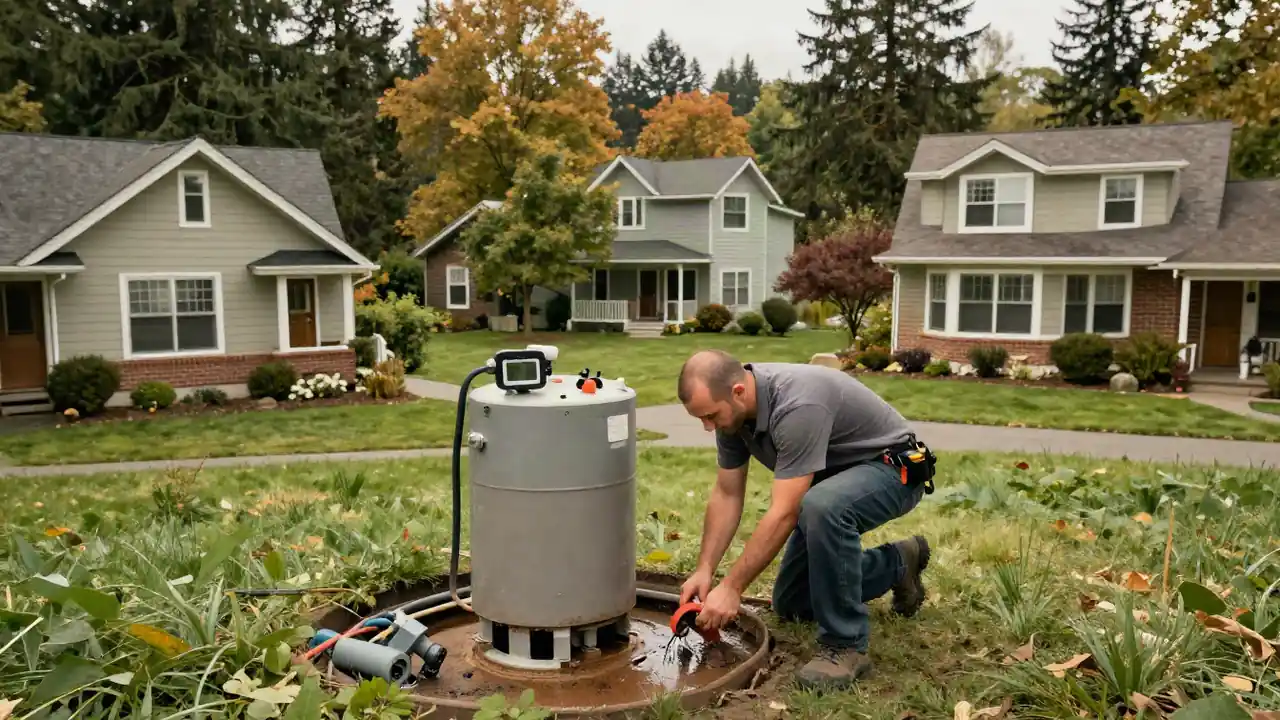
A water heater flush for hard water in Longview Washington takes about 45 minutes on a gas tank and 30 minutes on electric, assuming the drain valve is not clogged with scale. Here is the process.
What you need
- A garden hose long enough to reach a floor drain, utility sink, or the driveway
- A flathead screwdriver
- Work gloves and eye protection (the water comes out at 120°F+)
- A bucket for the first few gallons
The steps
- Turn off the heat source. Gas: set the dial to "pilot." Electric: flip the breaker at the panel. Never drain a tank while the burner or elements are live.
- Close the cold-water inlet valve on top of the tank.
- Attach the hose to the drain valve at the bottom and run the other end to a safe drain. Open a hot-water faucet somewhere in the house to break the vacuum.
- Open the drain valve and let it run. The first 5 gallons will be cloudy and may contain white grit - that is the scale you are removing.
- Flush until the water runs clear. If the flow slows to a trickle, the valve is clogged with scale. Close it, disconnect the hose, and call us - that is a sign the tank has significant buildup.
- Close the drain valve, reopen the cold inlet, and let the tank refill completely before restoring power or relighting the pilot. Running an electric element in a dry tank burns it out in seconds.
If your home is older - and a lot of Longview housing stock dates to the 1920s mill era - the shutoff valves may not seal cleanly. That is a common reason we get called for plumbing repairs longview WA after a DIY flush goes sideways.
Descaling: what it is and when you need it
Descaling is a deeper clean than a flush. Instead of just draining loose sediment, you circulate a mild acid - typically white vinegar or a food-grade citric acid solution - through the tank or heat exchanger to dissolve the bonded scale that a plain flush leaves behind.
You need descaling if any of these are true:
- Your tank is more than 5 years old and has never been flushed
- You hear popping or rumbling during heating cycles
- Hot water recovery has slowed noticeably - a shower that used to stay hot now goes lukewarm in 8 minutes
- You have a tankless unit (more on that below)
- You are on a private well in the Columbia Valley area, where hardness can run even higher than city water
Water heater descaling in Longview typically runs $150-$300 in 2026 for a tank unit, and $200-$400 for a tankless unit that requires a pump kit and a dedicated descaling port. Compare that to a $1,200-$2,500 replacement and the math is obvious.
Tankless units need more attention, not less
Tankless water heaters are more vulnerable to hard water than tank units, not less. The heat exchanger in a tankless unit is a narrow copper or stainless coil, and scale that would settle harmlessly to the bottom of a tank instead coats the inside of that coil and chokes the flow.
In Longview, we recommend descaling a tankless unit every 12 months - not the 18 to 24 months some manufacturers list. The symptoms of a scaled tankless are specific: reduced hot-water flow, error codes on the display, a rumbling sound during firing, and cold-water sandwiches in the middle of a shower.
If you are weighing a replacement, a tankless water heater installation longview WA done right includes a descaling port and isolation valves so future maintenance takes 30 minutes instead of 2 hours. We install them that way by default.
What to watch out for
Most of the water heater failures we see in Longview trace back to one of these mistakes.
- Waiting for a symptom. By the time you hear popping, scale has been building for 2+ years. Maintenance is cheaper than repair, every time.
- Flushing a tank that has never been flushed and is 10+ years old. Sometimes the sediment is the only thing plugging a pinhole leak. If your tank is that old and has never been serviced, have us look at it before you drain it.
- Setting the thermostat too high. Above 140°F, scale forms faster and scald risk goes up. 120°F is the sweet spot for most Longview homes.
- Ignoring the anode rod. It is a $30 part that adds years to a $1,500 tank. Check it.
- Using a water softener and assuming you are done. Softeners help, but they do not eliminate scale entirely, especially if the unit is undersized or the resin bed is exhausted.
- DIY descaling a gas tankless unit without shutting the gas off. We have seen this go badly. If you are not sure, call.
One more thing: if your home has galvanized pipes - common in Longview neighborhoods built before 1960 - the pipes themselves are contributing rust and mineral debris to the tank. In that case, repiping longview WA may be the long-term fix, and it is worth a conversation before you replace a third water heater in 15 years.
When to call a professional
Call us when the drain valve is clogged, when you see rust-colored water at the hot tap, when the T&P valve is dripping, or when the tank is over 8 years old and has never been serviced. Those are the situations where a DIY flush turns into an emergency.
Longview Riverbend Plumbing handles the full range - annual flushes, anode replacements, descaling, and full water heater installation longview WA when a tank is past saving. We give you a flat price before we start, and we test the unit before we leave.
If you are not sure whether your tank needs service or replacement, call us and we will tell you straight. Sometimes the answer is "you have 3 more years." Sometimes it is "this one is done." Either way, you will know.
Frequently Asked Questions
How does hard water affect my water heater in Longview?
Longview water measures 7-10 grains per gallon, which is hard. That mineral load settles as scale on the tank bottom and heating elements, cutting efficiency by 20-25% at a quarter-inch thickness, corroding the steel liner, and consuming the anode rod in as little as 2 years instead of 5.
How often should I flush my water heater in Longview WA?
Every 12 months. Longview's hard water builds sediment faster than the 2-3 year interval generic advice suggests. If your tank is 50 gallons or larger, or you have a big household, flush every 9-10 months. Tankless units need descaling every 12 months.
What is the best water heater for hard water in Longview?
A tank unit with a powered anode rod or a tankless unit with an integrated descaling port both handle hard water well. Stainless-steel tankless heat exchangers resist scale better than copper. Whatever you choose, the maintenance schedule matters more than the brand.
Can a plumber help with hard water issues in Longview Washington?
Yes. We flush tanks, descale tankless units, replace anode rods, test T&P valves, and can install a whole-home softener or a tankless descaling port. A single annual visit typically runs $150-$300 in 2026 and prevents most hard water failures.
How much does a water heater flush cost in Longview?
Expect $150-$250 for a standard tank flush in 2026, $200-$400 for tankless descaling, and $30-$80 for an anode rod replacement on top of a service call. A new tank installed runs $1,200-$2,500, so annual maintenance pays for itself many times over.
Get help with plumbing in longview
If your water heater is popping, running out of hot water faster than it used to, or has not been flushed in over a year, we can take care of it this week. One visit covers the flush, the anode check, the T&P test, and a straight answer on how much life your tank has left.
Call Longview Riverbend Plumbing at (360) 886-3111 to schedule your water heater maintenance.