How to fix low water pressure in your Longview house
Weak showers and slow taps in Longview usually trace back to a handful of causes. Here is how to diagnose and fix low water pressure in your house.
Low water pressure in a Longview house is usually caused by a clogged fixture aerator, a failing pressure regulator, a partially closed valve, or mineral buildup in galvanized pipes - and most of those you can check yourself in under an hour. If your shower has turned into a drizzle and your kitchen tap takes ten seconds to fill a glass, the fix is often simpler than you fear. This guide walks through the real causes we see across Longview, the checks you can run today, and when it is time to hand it to a plumber.
What low water pressure in Longview actually means
Fixing low water pressure in Longview WA is a diagnostic process that starts with knowing what normal looks like in your home. Normal residential water pressure runs between 40 and 60 psi. Anything under 40 psi feels weak at the showerhead; anything over 80 psi starts stressing your pipes, supply lines, and water heater fittings.
Pressure and flow are not the same thing. Pressure is the push behind the water. Flow is the volume that actually arrives. A house can have 55 psi at the main and still trickle at the kitchen sink because the line feeding that fixture is choked with scale. That distinction matters, because it changes what we look for first.
Longview sits on the Cowlitz River with a mix of 1920s mill-era homes, mid-century ranches, and newer builds out toward the Mint Valley area. The older housing stock still has galvanized steel supply lines in plenty of houses. Those pipes rust from the inside out, and by the time you notice weak pressure, the interior diameter may be half what it was when the house was built.
Why is my water pressure low in Longview? The seven causes we find most
The causes of low water pressure in Longview Washington come down to a short list, and we can usually narrow it to one or two within the first fifteen minutes on site.
1. Clogged aerators and showerheads
Mineral scale builds up on the tiny screen inside every faucet aerator. If one tap is weak and the rest of the house is fine, pull the aerator, soak it in vinegar for an hour, and rinse it. That single step solves the problem more often than any other.
2. A failing pressure-reducing valve
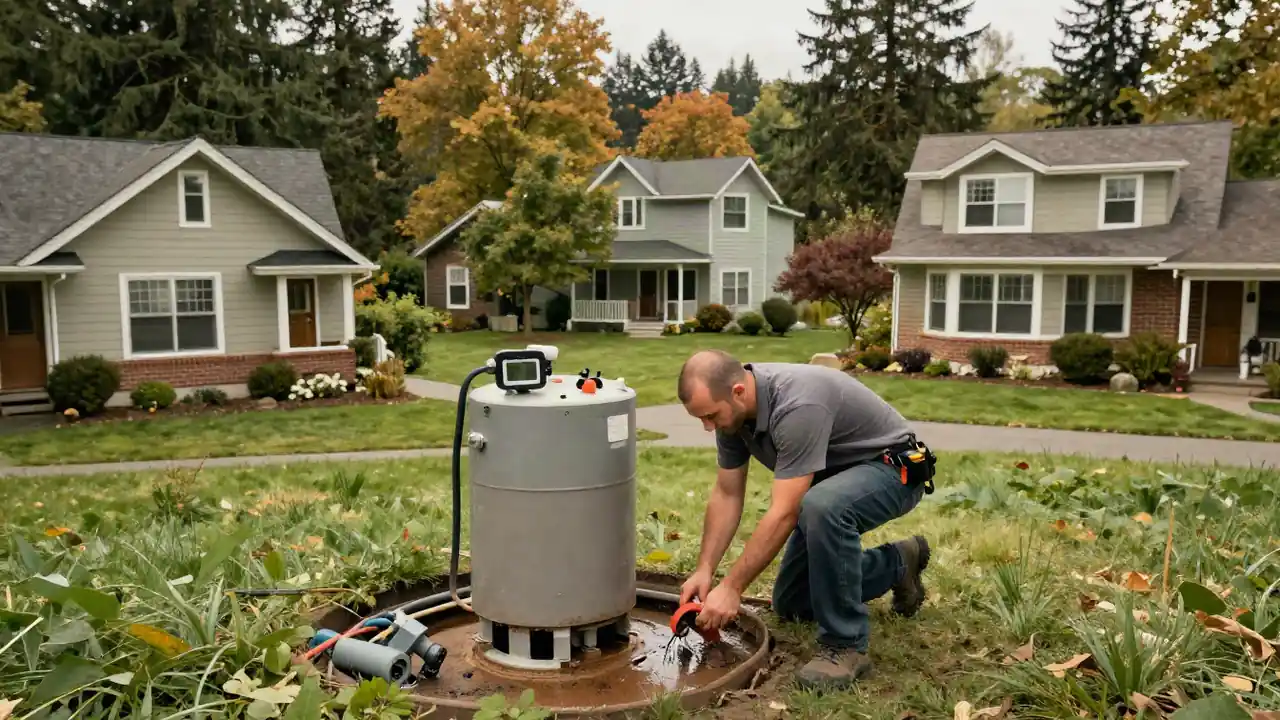
Most homes built after the 1980s have a pressure-reducing valve (PRV) where the main enters the house. PRVs wear out. When one fails, pressure can drop to 25 psi or spike past 100 psi. A plumber can test it at the hose bib in about five minutes.
3. Partially closed or failing shutoff valves
Every fixture has a shutoff valve under or behind it. If someone bumped one while moving a cabinet, or the gate valve inside has corroded, you get restricted flow. Gate valves older than 30 years often break internally and stay half-shut even when the handle says open.
4. Galvanized pipe corrosion
This is the big one in older Longview neighborhoods. Galvanized steel lines accumulate rust and scale until the inside looks like a clogged artery. Pressure drops gradually over years, then all at once. Repiping is the permanent answer.
5. A hidden leak
A slab leak or a pinhole in a copper line bleeds pressure before water ever reaches your shower. If your water bill jumped and you hear water running when nothing is on, that is your sign.
6. Municipal supply issues
Longview's water comes from the Cowlitz River through the city treatment system. Occasional main breaks or high-demand periods on hot summer afternoons can drop pressure at the meter. If your neighbors have the same problem at the same time, it is the city, not your plumbing.
7. Water softener or whole-house filter restriction
A clogged filter cartridge or a softener in bypass mode can cut pressure noticeably. Swap the filter and check the bypass valve before assuming anything worse.
How to fix low water pressure in your Longview WA house: a step-by-step check
How to fix low water pressure in your Longview WA house starts with isolating whether the problem is one fixture, one side of the house, or the whole property. Work through these steps in order and you will know within an hour whether you can handle it or need a pro.
- Test one fixture at a time. Run the cold tap at the kitchen sink, then the bathroom sink, then the shower. If only one is weak, the problem is local to that fixture.
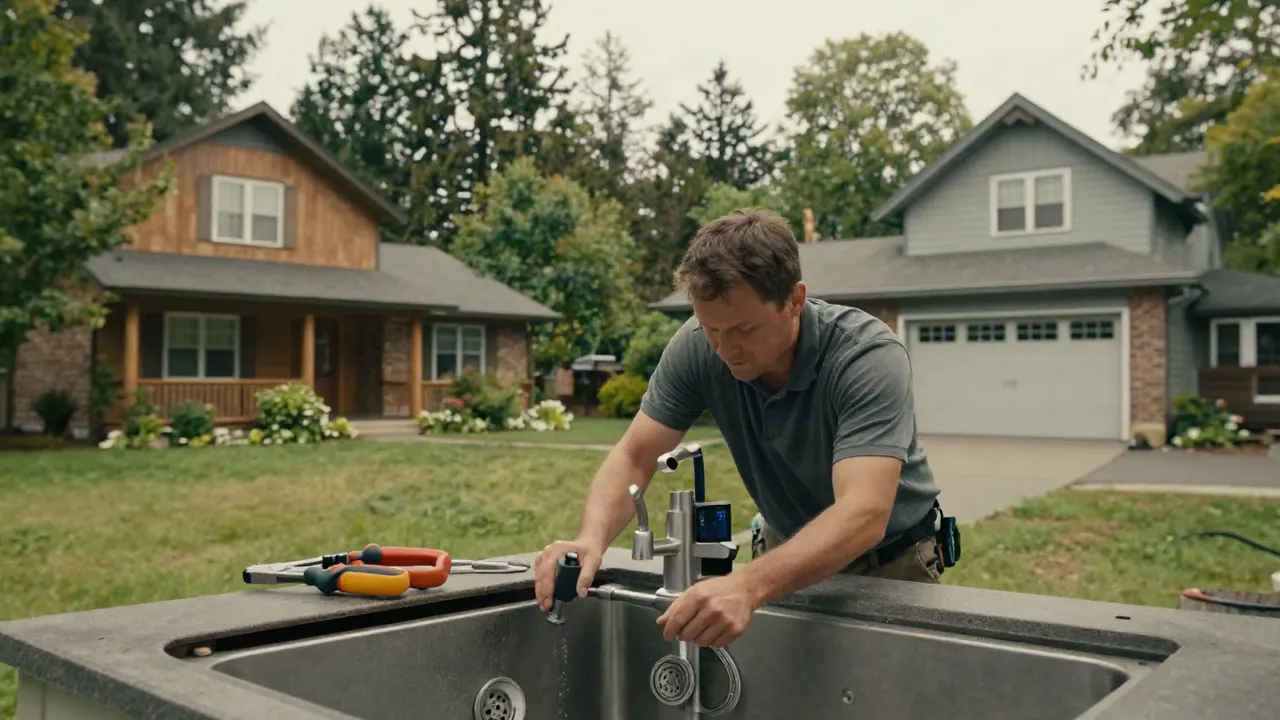
- Clean the aerator. Unscrew it by hand or with pliers wrapped in tape. Soak in white vinegar for 60 minutes, scrub with an old toothbrush, rinse, reinstall.
- Check the shutoff valves. Turn each under-sink valve fully counterclockwise, then back a quarter turn. If the handle spins freely without resistance, the valve is stripped and needs replacing.
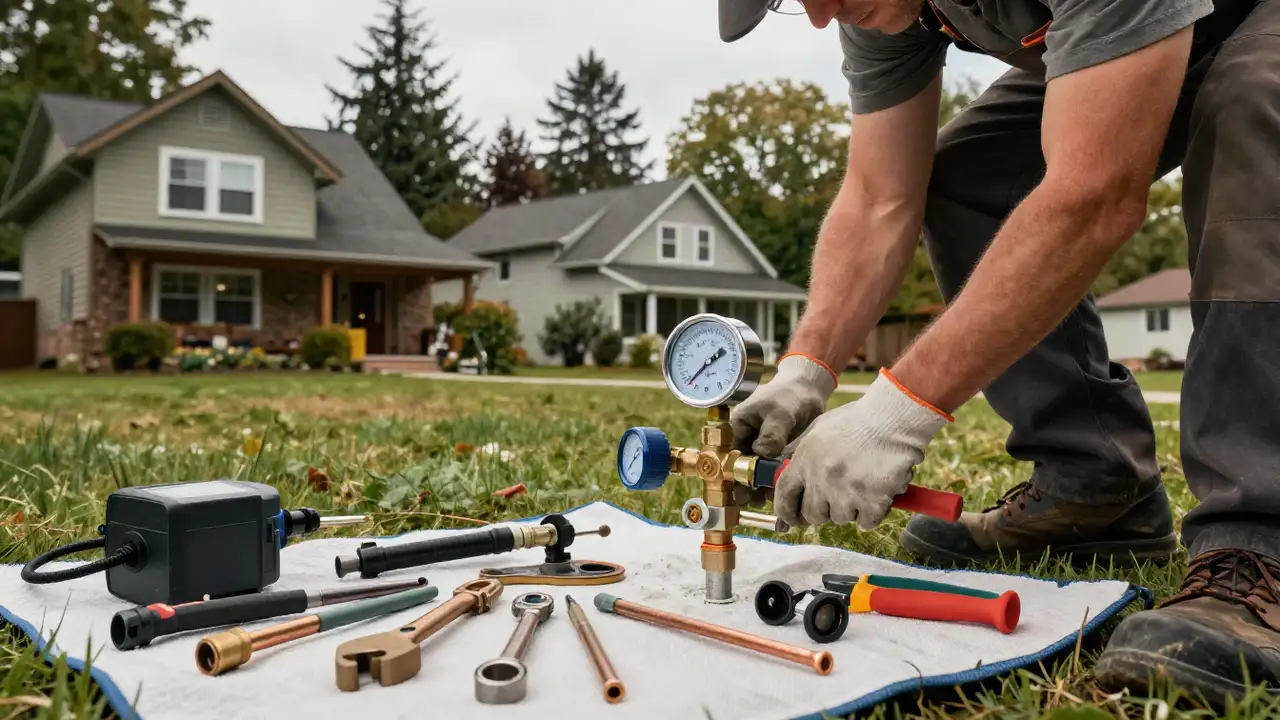
- Test at an outdoor hose bib. If pressure is strong outside but weak inside, the restriction is inside the house. If it is weak everywhere, the problem is at or before the meter.
- Look at your water bill. A sudden jump of 20 percent or more with no change in habits points to a leak. That is when professional leak detection longview WA pays for itself fast.
- Check the PRV. If you have one, a plumber can verify its setting with a gauge. Adjustment or replacement is a 30 to 60 minute job.
- Consider the pipe material. If your home still has galvanized steel supply lines, no amount of valve tinkering will restore full pressure. The pipe itself is the bottleneck.
If you have narrowed it down to a single fixture and the aerator cleaning did not help, the cartridge inside the faucet is likely scaled or worn. We handle that kind of work every week as part of our faucet repair longview WA service - usually a same-day visit.
When the problem is the whole house, not one fixture
Whole-house low pressure points to the main line, the PRV, or the pipe material itself. That is a different repair than a single dripping tap, and it is where most homeowners decide to bring in help.
Three signs tell you it is a whole-house issue:
- Every fixture is weak, hot and cold, upstairs and down.
- The outdoor hose bib is also weak.
- Your neighbors on the same block have normal pressure at the same time of day.
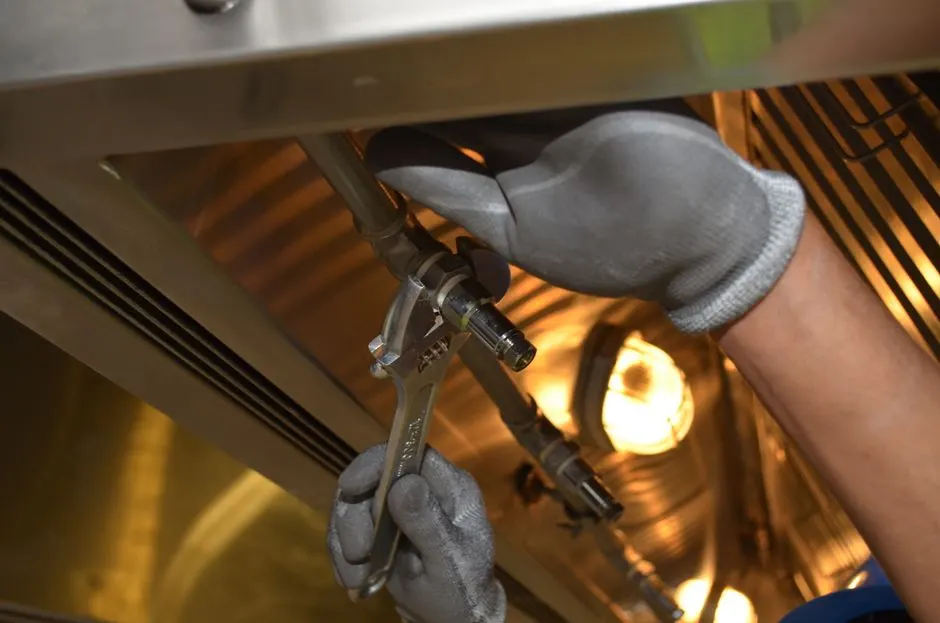
When we see those three together in an older Longview home, the answer is usually the supply piping. Galvanized lines from the 1940s and 1950s corrode from the inside, and once the interior diameter drops below half, no valve adjustment will bring pressure back. The permanent fix is replacing the affected runs. We do that work under our pipe replacement longview WA service, and for homes with widespread corrosion we recommend whole-home repiping so you are not back in the same spot in two years.
If your pressure problem comes with rusty brown water in the morning, that is confirmation the pipes are the source. Rust flakes do not come from clean copper or PEX.
Common mistakes we see Longview homeowners make
The biggest mistake is cranking up the PRV to compensate for a restriction elsewhere. That raises pressure on the whole system and can blow out supply lines, toilet fill valves, and water heater connections. You trade a weak shower for a flooded laundry room.
Other missteps we run into:
- Replacing the water heater when the real problem is upstream. If hot water pressure is weak but cold is fine, the issue is often the inlet nipple or a failing dip tube, not the tank.
- Ignoring a slow drip under a sink. Small leaks bleed pressure and rot cabinets. Fix them while they are cheap.
- Using a booster pump on a system with a hidden leak. You will just push more water into the wall cavity.
- Assuming the city is at fault. Call the city first if neighbors are affected, but do not wait a week to check your own side of the meter.
If you have a water softener, check the bypass valve before anything else. A softener stuck in bypass or a clogged pre-filter will drop pressure at every tap and looks exactly like a pipe problem.
When to call a plumber for low water pressure in Longview
Call a plumber for low water pressure in Longview when the problem affects more than one fixture, when you see rusty water, when your bill has jumped, or when you have already cleaned the aerators and checked the valves without improvement. Those four situations point to something behind the wall.
Our team at Longview Riverbend Plumbing handles this every day. We test pressure at the main, inspect the PRV, camera the supply lines if needed, and give you a straight answer on what is causing it and what it takes to fix it. We provide upfront pricing before we start, and we do not sell repiping to a house that just needs a new pressure regulator.
If you are also dealing with slow drains alongside weak pressure, the two are usually separate problems. Slow drains are a blockage issue, and our drain cleaning longview WA service handles that side of the house. Weak pressure is a supply-side issue. Both can be diagnosed on the same visit.
What does low water pressure repair cost in Longview WA in 2026?
Typical 2026 pricing in this area breaks down like this:
- Aerator cleaning or replacement: $0 to $25 in parts, no labor if you do it yourself.
- Pressure-reducing valve replacement: $250 to $550 installed, depending on access and valve size.
- Shutoff valve replacement at a single fixture: $150 to $300.
- Leak detection and repair: $300 to $900 for most residential cases, more if the leak is under a slab.
- Partial repiping of a corroded run: $800 to $2,500.
- Whole-home repiping: $4,500 to $12,000 depending on square footage, fixture count, and how much drywall has to come out.
Diagnostic visits in Longview typically run $75 to $150, and we credit that toward the repair when you move forward the same day. If you are on the fence, get the diagnosis first. Guessing at the cause is how a $300 valve job turns into a $6,000 repipe you did not need.
Frequently Asked Questions
How do I fix low water pressure in my Longview house?
Start by cleaning the aerator on the affected fixture and checking that the shutoff valve is fully open. If multiple fixtures are weak, test the outdoor hose bib. Strong outside and weak inside points to a PRV or interior restriction. Weak everywhere points to the main line or the city supply.
What causes low water pressure in Longview WA?
The most common causes are clogged aerators, a failing pressure-reducing valve, partially closed shutoff valves, and galvanized pipe corrosion in older homes. Hidden leaks and municipal supply issues also drop pressure. In Longview's older neighborhoods, corroded galvanized lines are the number one whole-house cause.
Can a plumber fix low water pressure in Longview?
Yes. A licensed plumber can test pressure at the main, verify the PRV setting, camera the supply lines, locate hidden leaks, and replace corroded pipe. Most pressure problems are resolved in a single visit once the cause is identified, usually within two to four hours.
How much does it cost to fix low water pressure in Longview Washington?
Most repairs land between $150 and $900 in 2026. A pressure-reducing valve replacement runs $250 to $550. Leak detection and repair is $300 to $900. Whole-home repiping, needed only when pipes are badly corroded, ranges from $4,500 to $12,000.
Will a water pressure booster help my Longview home?
Only if your incoming pressure is genuinely low and your pipes are clean. A booster pump in Longview WA runs $1,200 to $2,800 installed. If the real problem is corrosion or a hidden leak, a booster just pushes water into a failing system and makes things worse.
Get help with plumbing in Longview
Weak pressure is one of those problems that gets worse quietly. If you have worked through the checks above and your showers are still a trickle, we can find the cause and fix it. Our team serves homeowners across Longview and the surrounding Cowlitz County area with straightforward diagnostics and upfront pricing.
Call Longview Riverbend Plumbing at (360) 886-3111 to schedule a pressure diagnostic. We will tell you what is wrong, what it costs to fix, and whether you actually need the repair you think you do.