How to detect a hidden water leak in your Longview home
Hidden water leaks waste thousands of gallons and rot framing before you see a drop. Here's how Longview homeowners find them fast, with or without a pro.
You can detect a hidden water leak in your Longview home by shutting off every fixture, watching your water meter's low-flow dial for 15 minutes, and checking for warm floor spots, musty odors, or a water bill that jumped more than 10 percent. If the dial moves with nothing running, water is escaping somewhere between the meter and your fixtures.
That test takes about 20 minutes and costs nothing. What follows is how to narrow down where the leak is, which rooms and pipe types fail most often in Longview's older housing stock, what 2026 leak detection pricing looks like here, and when it makes more sense to hand the problem to a pro with acoustic and thermal gear.
What a hidden water leak actually is
Detect hidden water leak Longview WA work is the process of finding water loss that occurs inside walls, under slabs, or beneath your yard, where you cannot see the drip. A hidden water leak is a pressurized supply or drain failure that escapes behind finished surfaces, so the first evidence is usually a meter reading, a bill, or a smell rather than a puddle.
Visible leaks are easy. You see the drip under the sink, you put a bucket down, you call someone. Hidden leaks are different because the water travels. It follows the path of least resistance through framing, insulation, and gravel, which means the damage often shows up 10 or 15 feet from the actual break.
In Longview, three conditions drive most of them: aging galvanized and early copper supply lines in pre-1970 homes, high winter soil moisture that stresses buried lines, and the region's clay-heavy soil that holds water against pipe walls instead of draining it away.
How do I detect a hidden water leak in my Longview home?
Start with the meter test, because it is the only method that confirms a leak exists before you spend a dollar on anything else.
- Shut off every water user in the house. That means faucets, the dishwasher, the washing machine, the ice maker, and both toilets. A running toilet flapper is the single most common false positive.
- Find your meter. In most Longview neighborhoods it sits in a concrete or plastic box near the curb or the property line.
- Watch the low-flow indicator. It is the small triangle or dial that spins when even a trickle passes through. On a leak-free system it sits still.
- Wait 15 minutes. If the triangle has moved, you have a leak. Note how fast it moves - a slow spin points to a small supply leak, a fast spin to a broken line.
- Isolate the house from the yard. Close the main shutoff valve where the line enters the house, then recheck the meter. If it stops, the leak is indoors. If it keeps spinning, the leak is in the buried service line between the meter and your foundation.
That last step is the one most homeowners skip, and it is the one that tells you whether you are opening a wall or digging a trench.
What are signs of a hidden water leak in Longview WA?
The signs of hidden leak Longview Washington homeowners report most often are a spiking water bill, warm or damp floor spots, a musty smell that never clears, and the sound of running water when everything is off. Any two of those together justify a meter test the same day.
Here is what to watch for, roughly in order of how often we see each one:
- Water bill up 10 percent or more with no change in household habits. A pencil-thin supply leak can waste 6,000 gallons a month.
- A warm spot on the floor. On a slab foundation, hot-water lines run under the concrete. A leak there heats the slab, and you feel it through bare feet or tile.
- Musty or earthy odor in a closet, hallway, or under a cabinet. That is wet drywall, framing, or carpet pad, and it usually means the leak has been running for weeks.
- Paint or drywall bubbling, or a baseboard that has pulled away from the wall. Water pushes paint off from behind.
- Sound of running water at night when the house is quiet and nothing is on.
- Unexplained mold in a corner that has never had a moisture problem before.
- A water pressure drop at one fixture, or hot water that runs out faster than it used to.
- Green or unusually lush patches of lawn over the sewer or water service line, even in a dry August.
One more that catches people off guard: a spike in your sewer bill rather than your water bill. That points to a drain-side leak, and it is worth having our team take a look at sewer line repair longview WA options before the saturated soil causes a sinkhole under the driveway.
Where hidden leaks hide in Longview homes
Longview's housing stock splits into three rough eras, and each one leaks in its own places.
Pre-1950 homes
Galvanized steel supply lines in these houses are 70-plus years old. They corrode from the inside, and the first pinhole usually appears at a joint behind a kitchen or bathroom wall. If you have ever had a pipe repair longview WA done on galvanized, expect more of them.
1950 to 1980 homes
Copper supply lines and cast iron drains. Copper pinholes from aggressive water chemistry, and cast iron cracks at the hub. Slab-on-grade construction became common in this era, which is when under-slab leaks start showing up.
1980 and newer
CPVC and PEX supply, ABS drains. Fewer supply leaks, but more failures at fittings and at the transition points where new material meets old. Irrigation lines and hose bibs are the usual culprits here.
Across all three eras, the highest-probability locations are the same: behind the shower valve, under the kitchen sink, at the toilet flange, along the water heater pan, and in the buried service line between the meter and the house. If you are already chasing a moisture problem in a bathroom, our residential plumbing longview WA team handles the fixtures, the valves, and the drain connections behind them in one visit.
Slab leak detection in Longview WA
Slab leak detection Longview WA is the hardest category to diagnose from the homeowner's side, because the pipe is encased in concrete and the evidence is indirect. Warm floors, a hot-water line that loses pressure overnight, and a water bill that climbs in winter are the classic trio.
Here is the test you can run yourself. Shut off the cold-water supply at the water heater, then re-run the meter test. If the meter still spins, the leak is on the hot side, which narrows the search to the hot-water runs under the slab. If it stops, the leak is cold.
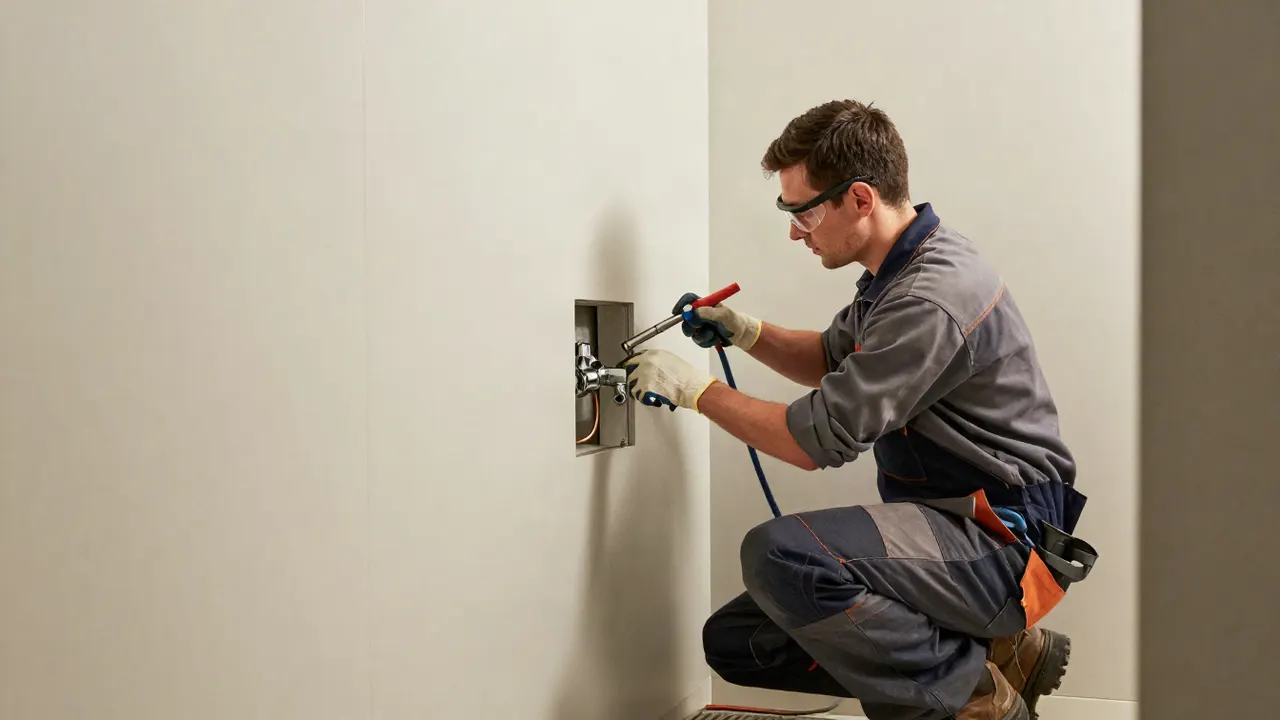
Confirmation takes equipment. We use acoustic listening discs to hear the leak through the concrete, thermal imaging to map the temperature difference, and in some cases a small access hole to visually confirm before we cut anything. That sequence matters - you do not want to jackhammer a slab on a guess.
Once we locate it, the repair is usually one of three things: a spot repair at the break, a reroute of that run through the attic or walls to abandon the under-slab section, or a full repiping longview WA if the pipe has failed in more than one place. We walk you through which one fits your house and your budget before we start.
What leak detection costs in Longview
Typical 2026 pricing in this area runs $250 to $450 for a residential leak detection visit, with slab and underground work at the higher end because of the equipment involved. The detection fee is separate from the repair, and it is money well spent - it is what keeps a repair from turning into exploratory demolition.
For context on the repair side:
- Accessible supply line repair behind a wall or under a sink: $200 to $600, depending on access.
- Slab leak spot repair: $1,200 to $3,500, including concrete cutting and patching.
- Reroute of an under-slab run: $1,800 to $4,500.
- Buried service line replacement from meter to house: $2,500 to $6,000, depending on length and whether the driveway has to come up.
Compare that to the cost of waiting. A leak running at one gallon per hour wastes 720 gallons a month, and in Longview that is roughly $15 to $25 added to the bill. A leak running at 10 gallons per hour is $150 to $250 a month, and it is quietly destroying framing the whole time.
If you would rather have the whole house looked at while we are there, our plumbing repairs longview WA service covers the fixtures, valves, and shutoffs that tend to fail next.
Common mistakes when chasing a hidden leak
The single biggest mistake is assuming the wet spot is where the leak is. Water runs downhill and along framing, so a stain on the ceiling of a first-floor hallway often traces back to a second-floor bathroom 15 feet away.
Other ones we see regularly:
- Skipping the toilet check. A flapper that fails to seal will spin the meter exactly like a supply leak. Dye in the tank, wait 10 minutes, look in the bowl.
- Testing with the irrigation on. A zone valve that will not close fully looks identical to a house leak on the meter.
- Cutting into drywall before isolating. You end up with three holes and no answer.
- Ignoring the water heater. The T&P valve and the drain valve both drip, and both sit in a pan that hides the evidence.
- Waiting for the bill to double. By the time it doubles, the leak has usually been running for two or three billing cycles.
- Treating a slab leak as a cosmetic problem. Warm floors feel nice in January. The rebar under them does not appreciate it.
When to call a professional
Call us when the meter test confirms a leak and the isolation step points to the slab, the buried service line, or a wall you cannot open without tearing out tile or cabinetry. Those three situations need acoustic, thermal, or pressure-testing equipment that no homeowner keeps in the garage.
Longview Riverbend Plumbing finds the leak first, then fixes it. We do not open a wall or cut concrete until we know exactly where the water is coming from, and we test the line under pressure before we leave. If you have already run the meter test and the dial moved, you have done the hard part - the rest is our job.
Frequently Asked Questions
How do I detect a hidden water leak in my Longview home?
Shut off every fixture, then watch the low-flow triangle on your water meter for 15 minutes. If it moves, you have a leak. Close the main shutoff at the house and recheck - if the meter stops, the leak is indoors; if it keeps spinning, it is in the buried service line.
What are signs of a hidden water leak in Longview WA?
A water bill up 10 percent or more, warm spots on a slab floor, musty odors in closets or under cabinets, bubbling paint, and the sound of running water when everything is off. Any two of those together justify testing the meter the same day.
How much does leak detection cost in Longview?
Expect $250 to $450 for a residential detection visit in 2026, with slab and underground work at the higher end. That fee is separate from the repair, and it typically saves more than it costs by preventing exploratory demolition.
Can a plumber find a hidden leak in Longview Washington?
Yes. We use acoustic listening equipment, thermal imaging, and pressure isolation to pinpoint leaks behind walls, under slabs, and in buried service lines. Most residential leaks are located within one to two hours on site.
How long can a hidden leak run before it causes real damage?
Framing and drywall start to degrade within two to three weeks of continuous moisture. Mold growth typically begins in 24 to 48 hours on wet organic material. A slab leak can undermine concrete over several months before you notice a crack.
Get help with plumbing in longview
If your meter is spinning and you cannot find the source, we can be at your door with the equipment to locate it. Call Longview Riverbend Plumbing at (360) 886-3111 and we will find the leak, fix it, and confirm the line holds pressure before we pack up.